Meh: A Story about Depression, by Deborah Malcolm

Meh: A Story about Depression is a wordless picture book with remarkably evocative, content-rich illustrations leading the reader on an emotional and spiritual journey through an episode of depression and recovery.
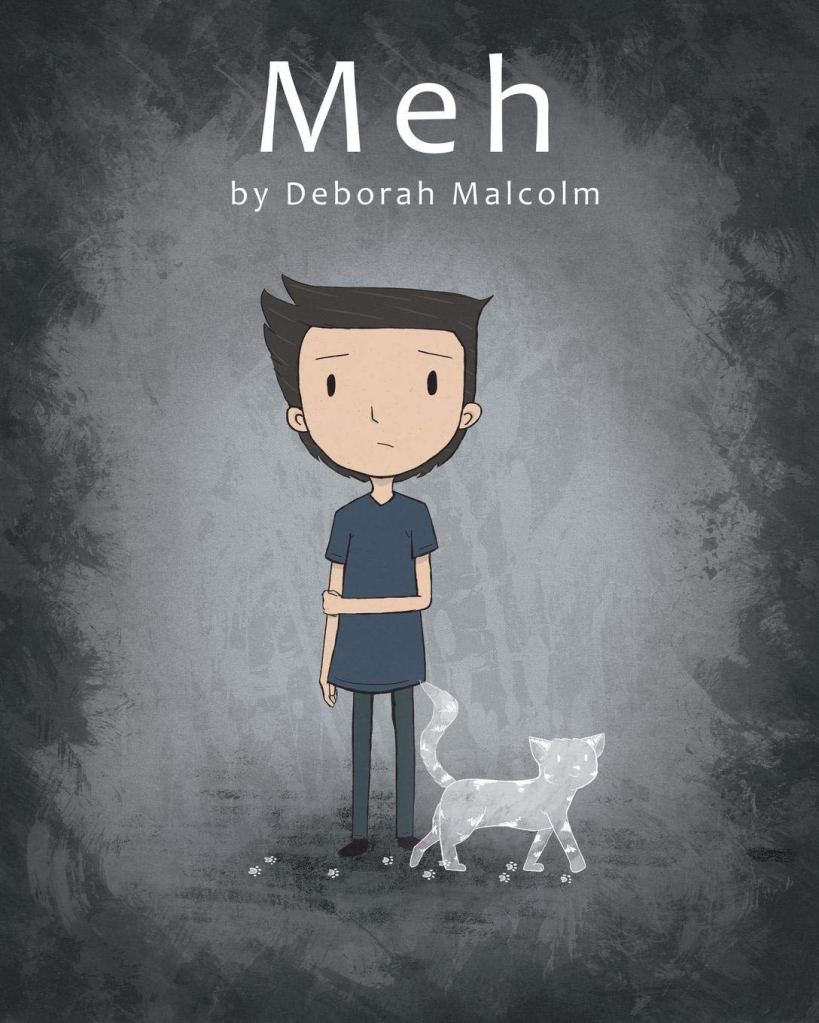
The concept of using a picture book to launch a conversation about depression with a child is fascinating and brilliant, in my view. You’ll want to see the book for yourself, through your own lens, and no doubt it will bring to mind memories of experiences and observations. It’s also a testament to the miraculous quality of art – I read all of the following from a book that has no words!

The Title

The title is a word made popular by the “meh” emoji (star of the recent Emoji Movie), and it’s a fascinating choice for two reasons. Emojis are a regular part of life for children and teens, and it’s telling that this emoticon was chosen as the main character in the film. Like the film, this picture book’s choice of “meh” is an important nod at research linking technology use with anxiety, and depression, especially in younger users. It’s one of many aspects of the book that lead easily into a conversation that’s essential for a child encountering depression, or anxiety.

But the title is also an immediate, powerful statement of understanding. “Meh” means “I’m not strongly negative or positive.” It suggests an absence of feeling where feeling would be desirable, so there’s an overtone of wishfulness. This is a simple, one-word verbalization of the complex numbness that’s often a hallmark of depression. And the choice to describe this feeling with a word anyone under 30 will immediately associate with an emoji is a message to a child reader that whoever wrote this book “gets it” and is familiar with the world the child is confronting. Loneliness is depression’s weapon, and to be understood is the first, best antidote.

No Text

One difficult but important task in caring for a child suffering from depression or anxiety is to leave space for them to vocalize what’s happening. It’s so tempting, in our effort to show understanding and support, to rush in with our own words, covering over their experience with our perception of it. The wordless pictures in Meh remind us to ask and then be quiet, letting the words come from the child. The book includes a list of questions to encourage discussion, along with a kindly reminder to be clear that there are no wrong answers.

In addition to the questions provided, Meh lends itself to the kind of simple, non-threatening questions you would ask about any picture book you’d read with a child. But in this case, those natural questions lead straight into important conversation because the illustrations are creative and intelligent. These questions could include the following, and more:

  • Why is there so much blackness in the picture now?
  • When did you first notice the cat?
  • Why do you think the cat is light-colored?
  • How do you think the boy feels about the cat?
  • How do you think the cat feels about the boy?
  • Does the cat remind you of any people you know? Why?
  • What decision do you think the boy is making on this page where he’s looking up at the cat?

Two Roles

That last question highlights another vital strong point of the book. In the depths of those black pages (and moments), our first reading of the picture is that the loving little cat is leading this boy out of the darkness (sorry for the spoiler!). The cat is rescuing the boy. This is true, but it is not the whole truth, either in the picture or in life. The boy is choosing to follow the cat.

One illustration is especially poignant. On the left page, we see the boy standing at the bottom of a formidable rocky hill, looking up at the cat, who is looking down at him from the top. On the facing page, the boy is struggling hard to climb over the ledge onto the top of the hill, where the cat is waiting for him. Just below that image, we see the boy and the cat resting together. The message is clear – the cat is not rescuing the boy single-handedly. The boy is rescuing himself, with merciful and responsible guidance from the cat.

This is an enormous truth. All of us in the darkness need that leading light, AND we need the gritty, hang-on-by-your-fingernails effort to work our way back to healthy life.

#BetheCat

Meh is an excellent tool for reaching children struggling with depression or anxiety. But it can also inspire informed sympathy in children who may see a classmate or cousin who needs help. You can read the book through the eyes of either character (or both!). Children will notice that the cat enters gently – at first, we see only the tiny paw prints on the dark earth – but becomes powerful as a lion when strength is needed. The cat is encouraging, but not enabling. And the cat stays with the boy through the entire journey, even the end of the journey, in peace and celebration. I would love to see the #bethecat hashtag taken over by children and caregivers who are choosing to walk into the darkness, and out again, for the people they love.

A paperback edition of Meh: A Story about Depression is available on Amazon. 

I received an electronic copy of this book from the publisher in exchange for an honest review.
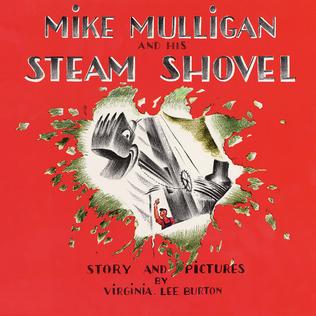
Mike Mulligan and His Steam Shovel, by Virginia Lee Burton

I can’t remember my life before Mike Mulligan and His Steam Shovel. My mama read it to us, sitting on the big bed in her room. The bedspread was lemon yellow, with hundreds of tiny pom-poms all over it. I’m sure there’s a word for this kind of fabric, but I didn’t know the word. I just really liked twiddling with those little green-pea-sized poms.

I love this book so much. I love that it was published before picture books became standardized (1000 words, 32 pages, always no matter what). I love the glimpse of old-fashioned small-town life it provides, and the way it alludes to industrialization and technology and their impact in one human microcosm. I love the way you can read the whole story as a testament to the wonders of reusing and recycling. I love the rhythm of the words, the way they stick in your memory and appeal to the part of your brain that descended from your pre-literate ancestors who told stories in sing-song voices around a crackling fire in the cave.

It wasn’t till I read Mike Mulligan and His Steam Shovel to my own child that I noticed the footnote near the end of the book. It’s on the page where “the little boy, who had been keeping very quiet, had another good idea.” (I’m not going to spoil the story for you. You’ll have to read the book to find out what the idea was and why Mike Mulligan needed it.) The footnote says, “*Acknowledgements to Dickie Birkenbush.”

Who is Dickie Birkenbush?

A few seconds of research provides the answer. Dickie Birkenbush was the 12-year-old son of Virginia Lee Burton’s friends. His family happened to be at the Burton house for dinner one night when Virginia was talking about the book. She had “written herself into a corner” and wondered what to do. Dickie offered a suggestion, she took it, and the rest is picture-book history. Interestingly, Dickie’s name was spelled incorrectly in the original edition of the book (which I have). In later editions, the footnote is corrected to read “*Acknowledgments to Dickie Berkenbush.”

You will be pleased to learn that Dickie grew up to be a fire chief, police chief (it was a small town), and selectman. I’m sure he did a much better job than Henry B. Swap.

Mike Mulligan and His Steam Shovel is available on Amazon in library binding, paperback, board book, ebook, audiobook, and hardcover 75th anniversary editions.

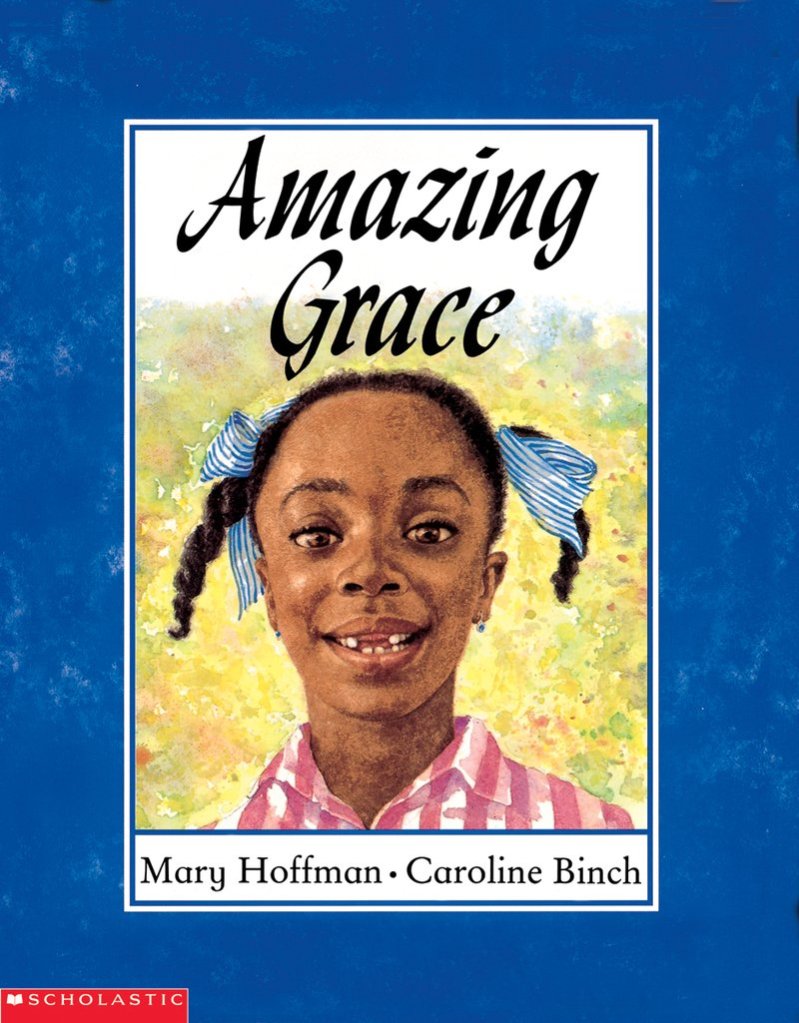
Amazing Grace, by Mary Hoffman

“Grace loves stories, whether they’re from books, movies, or the kind her grandmother tells. So when she gets a chance to play a part in Peter Pan, she knows exactly who she wants to be. Remarkable watercolor illustrations give full expression to Grace’s high-flying imagination.”

Word person that I am, I’m still going to talk about the pictures first for Amazing Grace. Caroline Binch has created an extraordinary work of art here, precisely because the pictures aren’t “extraordinary” in the usual sense. They are life-like. It’s not photo-realism, but it’s clear on every page that she must have taken the people in the book from life – she had models. You look at Grace and Mama and Nana, and you are POSITIVE that they are real people who agreed to pose for the illustrations. And Caroline’s genius is that she achieves this powerful sense without photo-realism. There are soft edges. You know it’s a painting. But the personhood it depicts leaps out of the page at you.

That’s especially important for this story, in which Grace is struggling to overcome the limitations other people want to set for her. Her own peers try to use her gender and her race against her, and just as the illustrations are life-like, the text is life-like too – undramatic, simple, and resoundingly true. Grace’s classmates aren’t deliberately cruel. They’re unconsciously giving voice to the prejudices that are accepted by the world around them. The same children are just as susceptible to Grace’s confidence and talent when she finds the courage to display them.

This is what makes Amazing Grace so powerful – the just-plainness of it, the way you immediately recognize it as truth despite the fact that story is fiction. The best art, in my view, reveals and reflects on truth. Mary Hoffman pulls it off, with both simplicity and depth. Where some stories can be funny for both children and adults, this story can be true and encouraging for readers of all ages.

This book is available on Amazon in hard cover, paperback, ebook, and audiobook editions, and a special 25th anniversary edition.

Froggy Learns to Swim, by Jonathan London

“Zzzziiiinnngggg splash!
Everyone’s favorite frog learns to swim!

Frogs are supposed to be great swimmers. “Not me!” says Froggy, who’s afraid of the water. But with a little encouragement, some practice, and the help of a silly song or two, Froggy becomes an expert frog-kicker!”

You have to read this book out loud. You can’t help reading it “in voices.” Froggy’s voice is very life-like (which is to say child-like), and if you are a parent, the voice of Froggy’s mother will come naturally to you. It’s the voice you hear coming out of your own mouth a dozen times a day.

“Say, ‘Bubble bubble,’ under water. Then raise your face for air and say, ‘Toot toot.'”

“I don’t want to,” Froggy whined.

“Oh come on, Froggy, just try it. Repeat after me: ‘Bubble bubble, toot toot.'”

Frank Remkiewicz’s illustrations are the best – the froggy facial expressions and body postures exactly match the querulous, bowdacious, very human moods and reactions of this amphibian family. The story is funnier because the characters are frogs, but also because those frogs are so much like people!

I must admit that part of me would adore a watermelon swimsuit and ruffly pink bathing cap, just like what Froggy’s mother is sporting. And of COURSE her name in the book is “Froggy’s mother.” Speaking as one who has also given birth (though not to a frog), this is how we are known. If Froggy’s mother ever had a name, you can be sure no one uses it now. She’s Froggy’s mother. You can’t blame her for the watermelon swimsuit. Not at all.

But with all this froggy fun at the pond, the book makes a good point. If you are hesitating on the brink, sure you can’t do it (whether “it” is swimming or another challenge), if you just keep breathing and working the routines you’ve been taught by someone who loves you, you’ll be surprised what you can overcome – even your own nervousness.

Bubble bubble, toot toot!

This book is available on Amazon in paperback, ebook, and school/library binding editions.

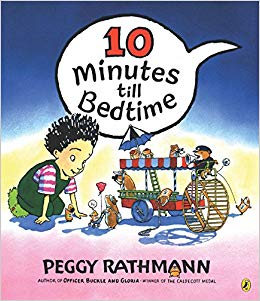
10 Minutes till Bedtime, by Peggy Rathmann

“Bedtime routines have never been so hilarious!

At One Hoppin’ Place, the countdown to bedtime is about to begin when a family of hamsters arrives at the front door.”All aboard!” the child’s pet hamster, dressed as a tour guide, shouts, directing them to his bus. It’s off to the kitchen for a snack, to the bathroom for toothbrushing, to the bedroom for a story. And just as the child begins to read, the tour guide looks out the window and shouts, “More coming!” Busloads and carloads of vacationing hamsters stream through the front door, ready to enjoy the escapades as the countdown continues.

A sure-fire toddler pleaser from the creator of Good Night, Gorilla.”

This is a book for readers who enjoy finding the story, and its humor, in every detail of the illustrations. 10 Minutes till Bedtime does not have text in the traditional sense. Each page is like a full-spread comic-strip box. What the characters say is written in beside them in the picture, or in a speech bubble, just like you’d see in a comic strip. But there is SO MUCH lively, story-telling detail packed into every picture that you can almost hear them happening out loud!

One fun aspect of the book is the way the plot unfolds at child-level, right behind the backs of adults who sometimes appear in the pictures but are always oblivious to the stream of hamster antics going on all over the house. It captures the thrilling, curious, giggling fascination of a small child’s inner world. It is real and riveting to the child, but almost invisible to the adults.

I love the way Peggy Rathmann plays with levels and layers of reality in this book. Not only do we see the dichotomy between the adult narrative and the child/hamster adventure, but we also see a character from another book (the gorilla from Goodnight, Gorilla) and we see the child in this book reading 10 Minutes till Bedtime to the hamsters! It invites a cascade of imagined pictures-within-pictures – the book being read in the picture has a page like this one that shows the book being read, and the book in that book has a book in it, and so does that one…to infinity! It’s a wonderful opportunity to play with the early outlines of abstract thinking which are still in the developmental future of toddler readers.

I also love the amount of detail. The illustrations take every chance, every inch, to add action, humor, and hamster subplots galore! A book that can be so innocently hilarious to a child and still entertain an adult reading along is a good gift.

This book is available in hardback, boardbook, paperback editions on Amazon.

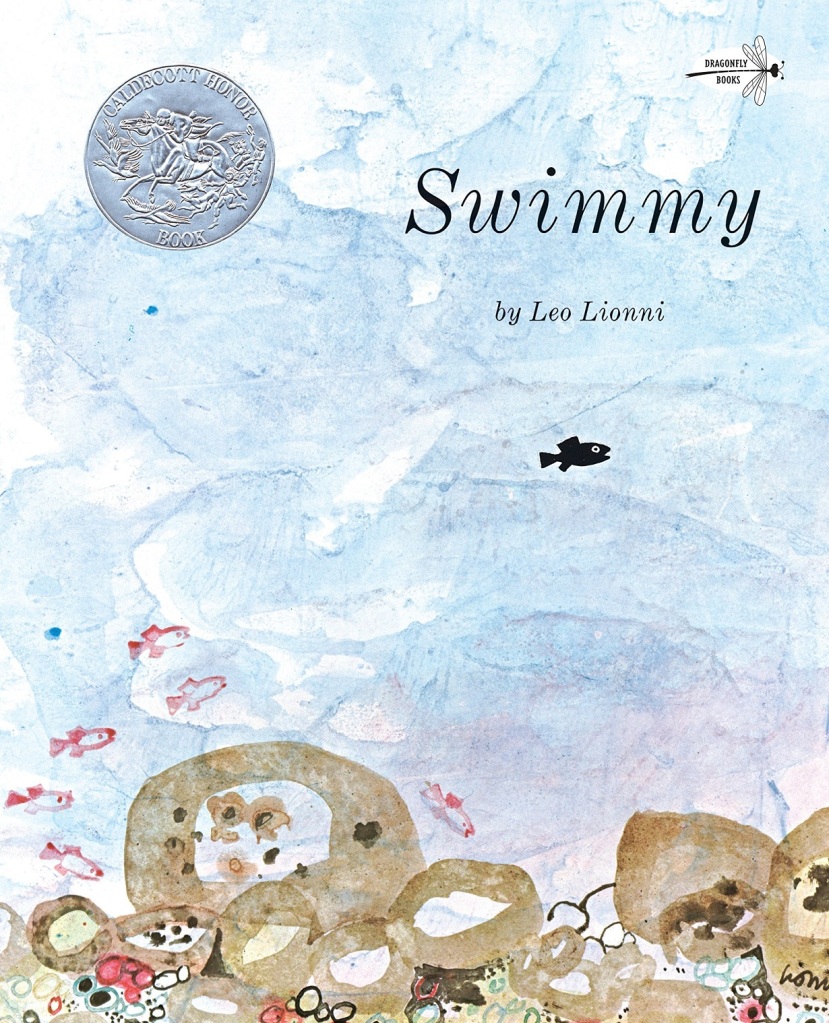
Swimmy, by Leo Lionni

The gorgeous, Caldecott Honor-winning tale of a very clever fish by beloved picture book creator Leo Lionni.

Deep in the sea lives a happy school of fish. Their watery world is full of wonders, but there is also danger, and the little fish are afraid to come out of hiding . . . until Swimmy comes along. Swimmy shows his friends how—with ingenuity and team work—they can overcome any danger.”

Swimmy is a classic. Why haven’t you read it?!? There is so much in this book!

Personally, I have used it at work to train authors, bloggers, and podcasters how to succeed at collaborative marketing. But it works just as well in the classroom and at home, to help little readers ponder how important they can be to one another. This is a book about grief, fear, friendship, and the ways beauty and purpose heal us. And all these BIG topics are handled with a light, clear touch. Just right.

But the sea was full of wonderful creatures, and as he swam from marvel to marvel Swimmy was happy again.

The water-color illustrations are wonderful. Water-color is the lovely for a story set entirely under the sea. The words are wonderful too, simple but so lyrical and perfect. The descriptions of the creatures Swimmy encounters will make you say, “Oh, my, yes! That’s exactly what it’s like!” I especially like the lobster “who walked about like a water-moving machine” and the eel “whose tail was almost too far away to remember.”

Although this book was originally released in 1968 (and there are still hardback originals available on Amazon), I am delighted to tell you that there’s a new paperback edition! You can find it HERE!

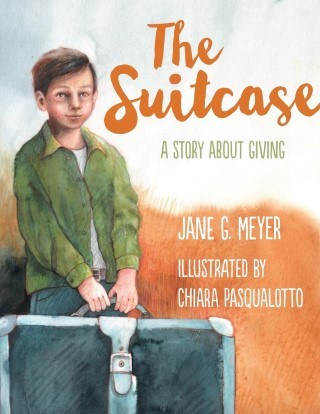
The Suitcase, by Jane G. Meyer

The Suitcase - A Story About Giving

The Suitcase: A Story About Giving is an original. It’s a child’s-eye view of the human spiritual journey, reduced to the most practical, tangible terms and yet still transcendent and full of light. It’s understated, luminously illustrated, and full of significant detail.

If I’d read this book as a child, I would have gone straight out to find my suitcase and gather the same real-life treasures to put into it that Thomas found. As an adult and a parent, I’m reflecting on how I’d respond to a child who came to me with this suitcase and these questions. And I’m seeing some fun activities that would grow quite naturally out of reading this story with children. At home or in Sunday school, The Suitcase blossoms easily into a treasure hunt, a conversation about the usefulness of everyday objects, and a foray into the ways we can add spiritual meaning to our actions.

The text lends itself to read-aloud time but is also accessible to early independent readers. One other note – I loved the description of Thomas being his “typical unusual self.” It’s a good description of Thomas and a gentle reminder that all of us are typically unusual. Our quirks and idiosyncrasies are the ways our inward journeys show themselves to the outside world. Love that.

This book is available on Amazon in paperback and ebook editions.

Learn more about Jane G. Meyer and her books here!