My kids know when I pull out our copy of “Catherine’s Pascha” by Charlotte Riggle that I’m going to cry. I can’t help it. You might think that means this is a sad story, but in fact it’s the brightest story we could have in the Orthodox faith.
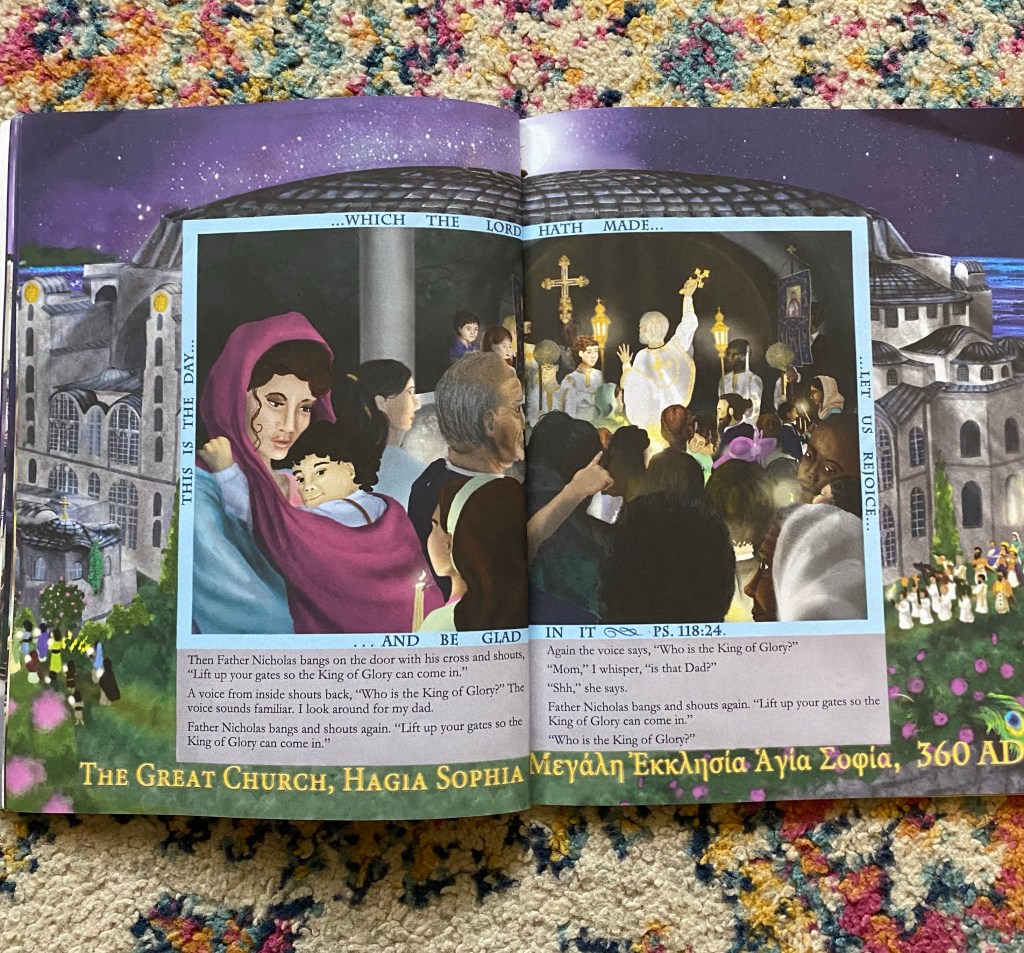
This book does an excellent job of viewing the Paschal Midnight Service from the eyes of a young girl (I would guess 8-10 years old), her family, and friends. What I love about this book is that on each page in the background is a different Orthodox Church from around the world. RJ Hughes takes us across the globe on that Holiest of nights when we as Orthodox celebrate the Resurrection of Christ.
Holy Resurrection Cathedral in Tokyo, Japan (background)
Catherine is determined to stay awake through the service with her best friend Elizabeth. They get up to normal kid stuff during Liturgy (dripping wax from their candles on their hands), which I appreciate as a mom of 4. This book is realistic in both the artwork and storyline, you can insert your family into this night of worship quite easily.
If you’re wondering about the part I cry in each read, it’s when the family is outside the church and the Priest knocks on the door and someone inside asks “Who is the King of Glory?!” Why does this part make me cry? It is one of my most vivid memories as a convert of my first Paschal celebration in 2008. It is also perhaps one of the most important services as Christians. Other than the Nativity service where we celebrate how Christ came into this world as both God and a babe, the defeat of death by his death and resurrection is key to our life in Christ as Orthodox Christians. He is the light and by his light we spread that to others through loving them in this life and worshipping him in both this world and the Three me to come.
“Lift up your gates so the King of Glory May come in!”
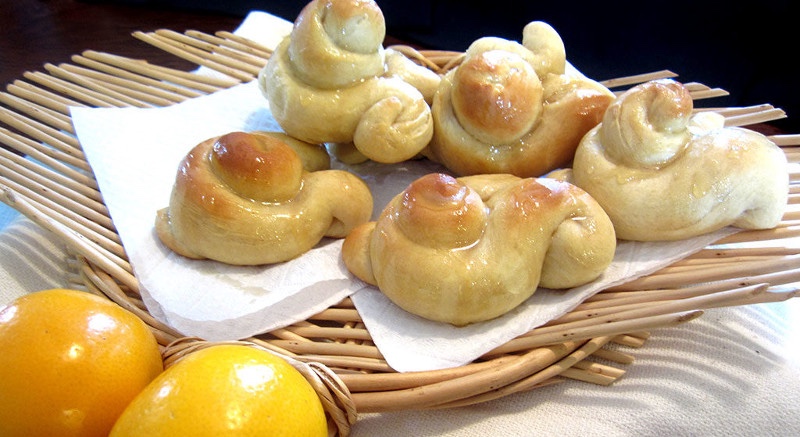
There are also some fun Pascha basket traditions in the book, Catherine’s mother makes Sticky Bubbies and my kids ask me every year to make them! Sticky Bunnies Recipe from the book: https://charlotteriggle.com/honey-bunnies/
Photo used with author Charlotte Riggle’s permission from her website.
I pray this book helps your family celebrate the night of Pascha year round and that it encourages you to have conversations with your children about our faith. -Kathryn Reetzke
“The Saint Nicolas Day Snow,” also by Charlotte Riggle and RJ Hughes
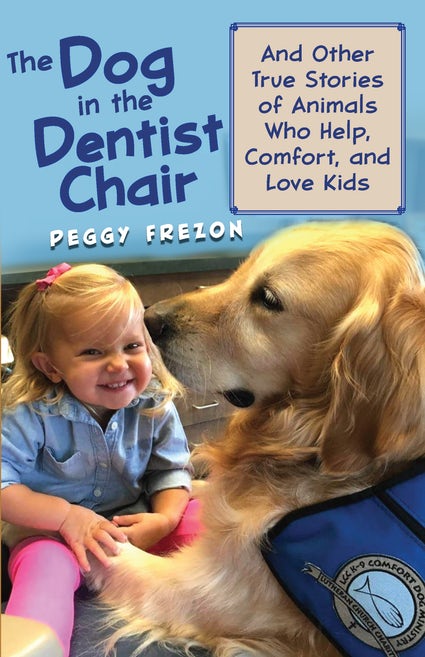
Reading The Dog in the Dentist Chair, I imagine Peggy Frezon like a reporter, walking around with a microphone in her hand, interviewing the special animals she’s discovered and getting their stories straight from the source, even though cats, dogs, and pigs can’t talk to us with human words. Her careful, loving observation of their personalities, their work, and the relationships they’ve built with their human friends make this the book our animal friends would write for us, if only they had opposable thumbs.
Peggy does an excellent job of blending points of view in each chapter. She helps us see the action from the animal’s point of view, but also from the child’s. The emotions and needs of both children and animals are noted and respected in each account. Peggy’s sympathy shines through the simple prose, inviting her young readers to feel recognized and understood.
I also like two other features of the book. Each chapter ends with fun facts about the animal we’ve just met – how big is he, what does she like to eat and play with, where does he live, what does she look like. The fact list is satisfying to the curious and a subtle reminder that these animals, and all the good things they represent, are real. That sense of happy reality is capped off with an aptly chosen Bible verse – short, sweet, and the perfect final touch. I love the rhythm this builds in each chapter, moving the child reader from curiosity to sympathy to comfort to confirmation, emotionally and spiritually.
The Dog in the Dentist Chairis also valuable for an adult reader. We grown-ups love animals too! But more than that, it’s an inspiring resource for parents, teachers, and care-givers looking for ways to reach and heal the children in their care. The book recounts a diverse array of human situations and needs, and the variety of animals who meet those needs, and the ways they do it, are thought-provoking and encouraging. I can readily imagine a reader finishing this book and going straight to the internet or library to find a local program to connect them with a helpful furry friend just like the ones in this good book.
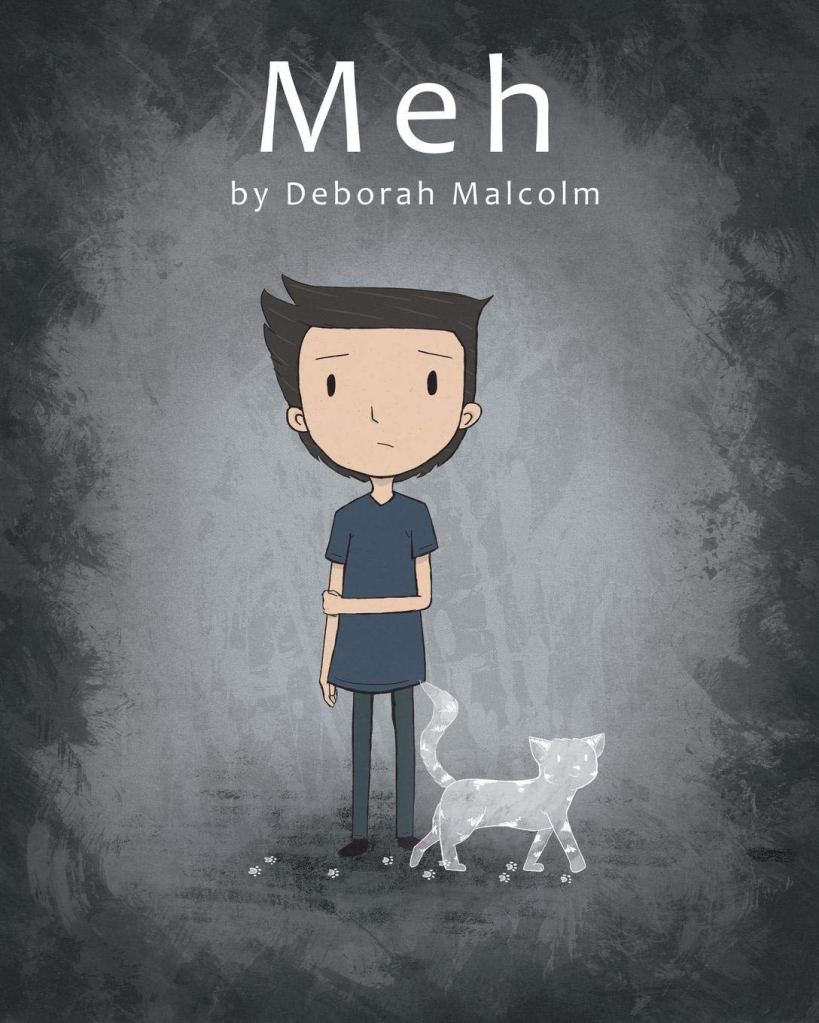
Meh: A Story about Depressionis a wordless picture book with remarkably evocative, content-rich illustrations leading the reader on an emotional and spiritual journey through an episode of depression and recovery.
The concept of using a picture book to launch a conversation about depression with a child is fascinating and brilliant, in my view. You’ll want to see the book for yourself, through your own lens, and no doubt it will bring to mind memories of experiences and observations. It’s also a testament to the miraculous quality of art – I read all of the following from a book that has no words!
The Title
The title is a word made popular by the “meh” emoji (star of the recent Emoji Movie), and it’s a fascinating choice for two reasons. Emojis are a regular part of life for children and teens, and it’s telling that this emoticon was chosen as the main character in the film. Like the film, this picture book’s choice of “meh” is an important nod at research linking technology use with anxiety, and depression, especially in younger users. It’s one of many aspects of the book that lead easily into a conversation that’s essential for a child encountering depression, or anxiety.
But the title is also an immediate, powerful statement of understanding. “Meh” means “I’m not strongly negative or positive.” It suggests an absence of feeling where feeling would be desirable, so there’s an overtone of wishfulness. This is a simple, one-word verbalization of the complex numbness that’s often a hallmark of depression. And the choice to describe this feeling with a word anyone under 30 will immediately associate with an emoji is a message to a child reader that whoever wrote this book “gets it” and is familiar with the world the child is confronting. Loneliness is depression’s weapon, and to be understood is the first, best antidote.
No Text
One difficult but important task in caring for a child suffering from depression or anxiety is to leave space for them to vocalize what’s happening. It’s so tempting, in our effort to show understanding and support, to rush in with our own words, covering over their experience with our perception of it. The wordless pictures in Mehremind us to ask and then be quiet, letting the words come from the child. The book includes a list of questions to encourage discussion, along with a kindly reminder to be clear that there are no wrong answers.
In addition to the questions provided, Mehlends itself to the kind of simple, non-threatening questions you would ask about any picture book you’d read with a child. But in this case, those natural questions lead straight into important conversation because the illustrations are creative and intelligent. These questions could include the following, and more:
Why is there so much blackness in the picture now?
When did you first notice the cat?
Why do you think the cat is light-colored?
How do you think the boy feels about the cat?
How do you think the cat feels about the boy?
Does the cat remind you of any people you know? Why?
What decision do you think the boy is making on this page where he’s looking up at the cat?
Two Roles
That last question highlights another vital strong point of the book. In the depths of those black pages (and moments), our first reading of the picture is that the loving little cat is leading this boy out of the darkness (sorry for the spoiler!). The cat is rescuing the boy. This is true, but it is not the whole truth, either in the picture or in life. The boy is choosing to follow the cat.
One illustration is especially poignant. On the left page, we see the boy standing at the bottom of a formidable rocky hill, looking up at the cat, who is looking down at him from the top. On the facing page, the boy is struggling hard to climb over the ledge onto the top of the hill, where the cat is waiting for him. Just below that image, we see the boy and the cat resting together. The message is clear – the cat is not rescuing the boy single-handedly. The boy is rescuing himself, with merciful and responsible guidance from the cat.
This is an enormous truth. All of us in the darkness need that leading light, AND we need the gritty, hang-on-by-your-fingernails effort to work our way back to healthy life.
#BetheCat
Meh is an excellent tool for reaching children struggling with depression or anxiety. But it can also inspire informed sympathy in children who may see a classmate or cousin who needs help. You can read the book through the eyes of either character (or both!). Children will notice that the cat enters gently – at first, we see only the tiny paw prints on the dark earth – but becomes powerful as a lion when strength is needed. The cat is encouraging, but not enabling. And the cat stays with the boy through the entire journey, even the end of the journey, in peace and celebration. I would love to see the #bethecat hashtag taken over by children and caregivers who are choosing to walk into the darkness, and out again, for the people they love.
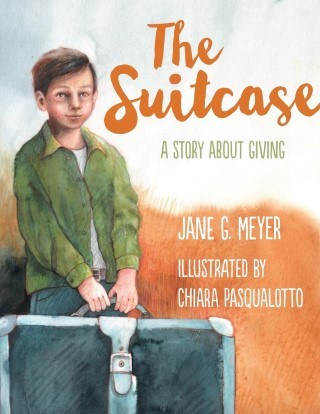
The Suitcase: A Story About Giving is an original. It’s a child’s-eye view of the human spiritual journey, reduced to the most practical, tangible terms and yet still transcendent and full of light. It’s understated, luminously illustrated, and full of significant detail.
If I’d read this book as a child, I would have gone straight out to find my suitcase and gather the same real-life treasures to put into it that Thomas found. As an adult and a parent, I’m reflecting on how I’d respond to a child who came to me with this suitcase and these questions. And I’m seeing some fun activities that would grow quite naturally out of reading this story with children. At home or in Sunday school,The Suitcase blossoms easily into a treasure hunt, a conversation about the usefulness of everyday objects, and a foray into the ways we can add spiritual meaning to our actions.
The text lends itself to read-aloud time but is also accessible to early independent readers. One other note – I loved the description of Thomas being his “typical unusual self.” It’s a good description of Thomas and a gentle reminder that all of us are typically unusual. Our quirks and idiosyncrasies are the ways our inward journeys show themselves to the outside world. Love that.
This book is available on Amazon in paperback and ebook editions.




 More to the Story