Guest poster Melissa Naasko shares this fascinating look at the way she’s teaching reading, writing, and a life-long love of good literature as she homeschools her 11 children.
I love words. I love the way that carefully chosen words capture scenes that are burned into my mind for years like tin-type photos, the way that they can draw up emotions from deep within like a bucket dropped into a well, and the way they melt onto my tongue and shape my own words as I quote them. I pore over phrases and specific word choices as I read books and articles and poetry. Simply put, I love words and I want my children to love them as much as I do. This means I want to cultivate a love of delicious, gourmet words in my children, so I work very hard to set before them a steady diet of quality literature. I cannot abide cheap, empty words, which means that I am exceedingly particular about the books I give my children.
How I Teach Writing
I teach my children how to write using quality children’s literature. I focus on books that use well crafted, memorable language, or sometimes words that are simple and pure but surprisingly evocative.
Children who are in the upper elementary and middle school grades use language of about the same sophistication. Using these books means that they can see how words cooperate with each other in different kinds of literary techniques, and they can imitate them for their own pieces.
Our Writing Workshop
Every month, we take a full day to have a writer’s workshop, and we push aside all other schoolwork and even most of the housework. I pick a theme, sometimes in cooperation with the teenagers who have their own favorite books and themes and techniques. I read aloud the books within the theme and focus on the words and the way that they play, and the children are not allowed to look at the pictures, which can sometimes be a distraction when we are specifically focusing on language. Sometimes we talk about the art, but that is a separate discussion, and while there is some overlap in my favorite books for words and my favorite books for art, there are pretty distinct books in both categories.
Sometimes, our theme is memorable language, phrases we can’t forget and find ourselves using again and again. Sometimes, it is realistic dialogue, wherein the words spoken by the characters flesh them out and give them depth. Sometimes, our theme is books that make us cry. Sometimes, it is books that make us ecstatic. Occasionally, it is the whole category of books that just make us feel anything intensely. One of the children specifically likes books that help her develop her sense of pacing because she likes to write suspenseful stories and tease out just enough information to keep her readers on the edge of their seat without frustrating them to the point that they leave.
Two Resources
I started teaching with this method after reading Teaching Writing with Picture Books as Models. This amazing book gave me a starting point for the conversations I have with my children. Since then, we have expanded from the book and its suggestions, but it was invaluable in the beginning.
I also suggest that you give your children a chance to write for an audience. My children are in love with a platform called StoryBird. This website allows children to create profiles from which they write stories. One of the best things about this site is that it doesn’t allow children to use real names or create profiles that reveal contact information or can be contacted privately. All comments on stories are public, and both the stories and the comments are reviewed and culled as appropriate. Accounts are free, but it can take a couple of weeks for a story to move through the moderation process, and this is sped up if the child has an account, which is pricey at $60/year. As a parent, you can create a free space for your children to write for assignments which is moderated and reviewed by you. The same can be done by traditional classroom teachers, but these stories cannot be viewed outside of the class.
Favorite Books
There are loads and loads of wonderful books that work for this teaching method. I thought I would tell you about eleven different books, each of which is a favorite of one my children or myself.
Wilfrid Gordon McDonald Partridge by Mem Fox
This evocative book never fails to make me cry. I have to read it slowly and breathe deeply because I cannot suppress the tears. It is about a little boy with four names who is friendly with the elderly residents home next door. He helps them remember things that they have forgotten. The language is simple and uncluttered but profoundly moving. When the author discusses an elderly woman who remembers her brother who went to war but did not come home it is what is not said that tightens my throat and makes my eyes well with tears. Simply writing about this book bring me to tears.
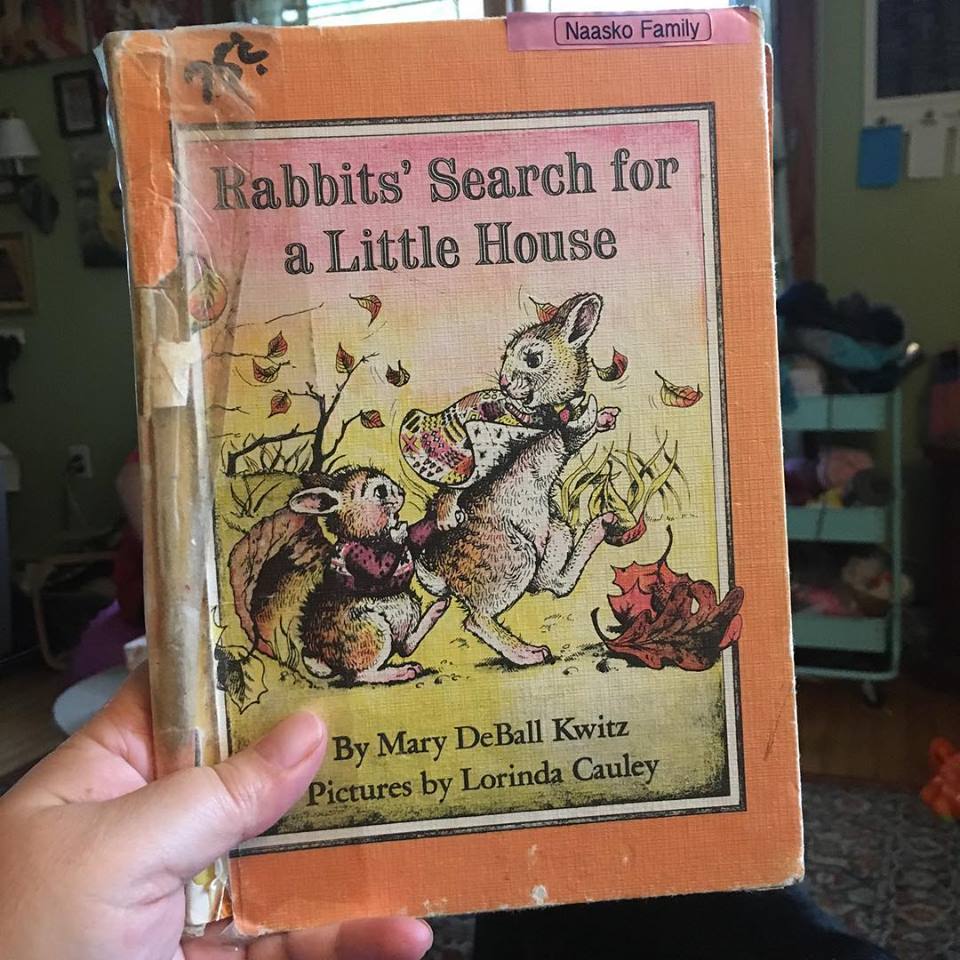
Rabbit’s Search for a Little House by Mary Deball Kwitz
This book uses simple, repetitive language to tell the story of a mother rabbit looking for a home for herself and her little rabbit as winter approaches. In our family, it is tradition to read it aloud with tea or hot chocolate and some home-baked treats on the day of the very first snow of the year. Our well-worn copy is very lovingly cared for by our children, and it holds pride of place in the house. We started this tradition with our oldest child, and now it is ingrained in the memory of our youngest as a pivotal celebration in the changing of seasons. My children recite lines from this all winter long.
The Relatives Came by Cynthia Rylant
This book beautifully captures the emotions of having a large, extended family coming to visit by touching on the physical aspects of it all. The author focuses on things like the sound of a house full of sleeping people breathing and being pressed in together in beds and on floors in makeshift sleep mats. The sensory aspect of this book is incredible. We had dear friends travel with their seven children to visit us, and many lines of this book were recited by my children describing having nine more people squeeze into our little farmhouse. It is a cozy, comfortable book worth reading again and again.
A Chair for My Mother by Vera B. Williams
Sometimes, books make all families well off and comfortable with few-to-no wants. This book captures what it is like for other families. I grew up very poor, and while my mother worked very hard to give us all us a sense that we were lacking nothing for being wrapped in love, I noticed other children had more than us. This book reminds me of my childhood. Following a tragedy, this little family of a daughter, a mother, and a grandmother find that they lose everything they own, and all they want is a chair. The language is gentle and not heavy handed, but leads the child to compassion in a subtle way.
All the Places to Love by Patricia MacLachlan
This is another book that always makes me cry. One of my children loves this book especially, and it probably started because a character shares his name. We live on my husband’s family’s nineteenth-century homestead, and there are many places here that are loved by different family members who are happy to tell my children about how they used to hide in the flour bin, the hoosier cupboard, or their favorite fishing spot at the creek. This book follows a family by discussing how their farm speaks to them. MacLachlan is a master of fleshing out characters in ways that are so delicate they are almost indiscernible, yet there they are.
Selma by Jutta Bauer
This book is very simply written, and it touches on what is the nature of happiness and the meaning of life, in discussing a little ewe. We raise sheep, so anything involving sheep interests my children, but this book touches on the beauty of a simple life. One time, we were in a group and the children started talking about what they would do if they had a million dollars and all the things they would buy. My son said all he needed was a little grass, a little lunch, a gossip with the neighbor, and he would be happy. This is the book I pull out when the little people are feeling a little greedy because it reminds us that we have all we really need.
The Memory Coat by Elvira Woodruff
My husband’s family immigrated from Finland at the very close of the nineteenth century and established this farm under the Homestead Act. In the upstairs hallway is the original deed signed by Teddy Roosevelt and copies of the Ellis Island manifest where they signed their names as they entered the country. I want our children to know what this meant, just what this process was. This book is an excellent way of showing it. The family in the book is entering the country and subjected to a brief physical exam, and it appears one of the children will be rejected and sent back home. Every time we read it, the children weep in fear for this child and sigh deeply in gratitude at the resolution. It is a book that they come back to when they talk about the needs of other children, and it is woven into their consciousness.
Roxaboxen by Alice McTerran
This book was chosen by one of the children but is a favorite of my husband in particular. He loves to read this book aloud to them. It is about a group of children who played town, like all children do. It is such a simple story, but it takes on a life of its own as our children think of the children as being like them and as we parents remember the children we used to be. When I teach the memoir thing, I ask the children to explain to me the way that they live their fantasies now. They don’t understand yet that these are the stories that shape the adults they will be and the ones that they will come back to when they need to know who they are.
The Old Woman Who Named Things by Cynthia Rylant
This book was chosen by one of the youngest children and by one of the oldest whom I then asked to name another book. This book uses self-conscious personification to develop the main character of the book, and it highlights her loneliness. Ultimately the book resolves well, but it is always a moving book for the children as they consider times they have been lonely. As they contemplate how they could have or would have alleviated the old woman’s loneliness, they stretch their little hearts and teach themselves how to love.
Blueberries for Sal by Robert McCloskey
This is a classic book, a giant in the canon of children’s literature. The story of a little bear and a little child becoming separated from their mothers and instead following the other mother is a classic. The world is big and getting lost happens, but how we find our way home is what counts. One of the things that my children like about this book is how the cub and child are similar, as are the mothers. The child who chose this book told me that it is fun to think of how we can be so different and so alike, and I think that is how we find our ways home.
The Hundred Dresses by Eleanor Estes
This is a book that I buy for every little girl we know at some point in her childhood. I have spent a lot of money sharing this book over the years. This book is about a clique of unkind girls, including one who is reluctantly mean, and the way they taunt another little girl. The subject of their cruelty is poor and wears the same dress every day, and when asked if she owns another, she tells them that she has a hundred dressed lined up in her closet. The resistance of the main character and her regret over actions inspires such kindness in children. If I could buy a copy for every child in the world, I would. That said, despite the fact that little girls are more likely (in my experience) to happily read a book about dresses, this theme is important for boys, too. My boys have all read and enjoyed this book.
What books would you include in your list and why?
Melissa Naasko is the wife of an Orthodox deacon, the mother of eleven hungry children, and author of Fasting as a Family from Ancient Faith Publishing. She cooks, knits, and writes from the Upper Peninsula.
This post’s first photo is by Milan Popovic on Unsplash. Melissa and I chose it because we think it captures childhood.




 More to the Story