Catherine’s Pascha by Charlotte Riggle

My kids know when I pull out our copy of “Catherine’s Pascha” by Charlotte Riggle that I’m going to cry. I can’t help it. You might think that means this is a sad story, but in fact it’s the brightest story we could have in the Orthodox faith.

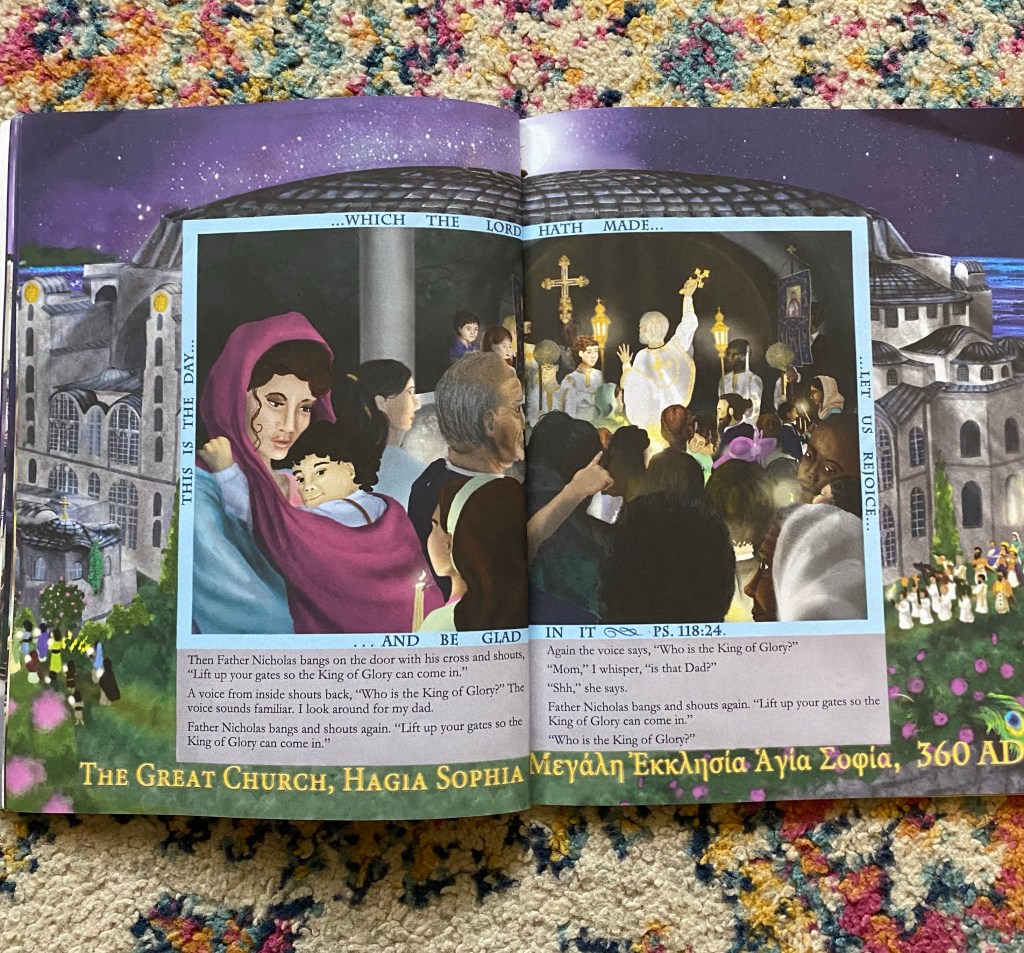
This book does an excellent job of viewing the Paschal Midnight Service from the eyes of a young girl (I would guess 8-10 years old), her family, and friends. What I love about this book is that on each page in the background is a different Orthodox Church from around the world. RJ Hughes takes us across the globe on that Holiest of nights when we as Orthodox celebrate the Resurrection of Christ.

Holy Resurrection Cathedral in Tokyo, Japan (background)

Catherine is determined to stay awake through the service with her best friend Elizabeth. They get up to normal kid stuff during Liturgy (dripping wax from their candles on their hands), which I appreciate as a mom of 4. This book is realistic in both the artwork and storyline, you can insert your family into this night of worship quite easily.

If you’re wondering about the part I cry in each read, it’s when the family is outside the church and the Priest knocks on the door and someone inside asks “Who is the King of Glory?!” Why does this part make me cry? It is one of my most vivid memories as a convert of my first Paschal celebration in 2008. It is also perhaps one of the most important services as Christians. Other than the Nativity service where we celebrate how Christ came into this world as both God and a babe, the defeat of death by his death and resurrection is key to our life in Christ as Orthodox Christians. He is the light and by his light we spread that to others through loving them in this life and worshipping him in both this world and the Three me to come.

“Lift up your gates so the King of Glory May come in!”

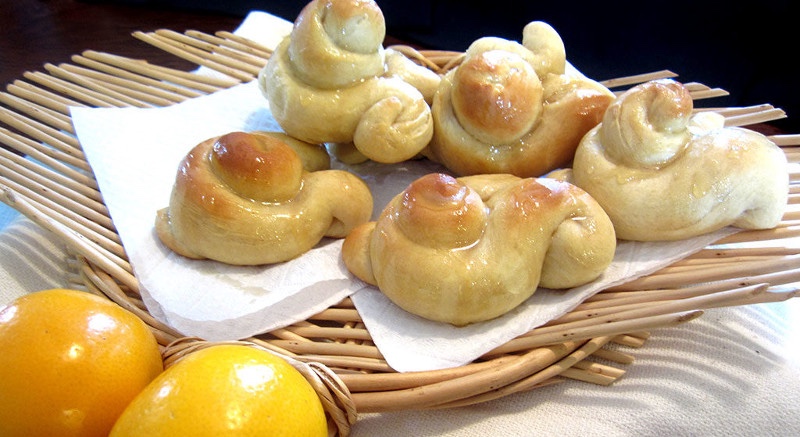
There are also some fun Pascha basket traditions in the book, Catherine’s mother makes Sticky Bubbies and my kids ask me every year to make them! Sticky Bunnies Recipe from the book: https://charlotteriggle.com/honey-bunnies/

Photo used with author Charlotte Riggle’s permission from her website.

I pray this book helps your family celebrate the night of Pascha year round and that it encourages you to have conversations with your children about our faith. -Kathryn Reetzke

“The Saint Nicolas Day Snow,” also by Charlotte Riggle and RJ Hughes

You can order Charlotte’s books from her site for bulk orders or follow the directions there: https://charlotteriggle.com/store/

Charity’s Review of Fancy Nancy: My Family History

Fancy Nancy likes to explore big words. In working with genealogy, a fancy word for family history, there are a lot of big words and concepts. Fancy Nancy encounters many of these concepts in her class assignment to write a report about an ancestor, someone in her family who lived a long time ago. However, in the process of writing her report, Nancy falls prey to the temptation that all family historians encounter at some point in documenting their family. She decides that the ordinary, every-day lives of her great-grandparents were not exciting enough for her report, so she decides to add some made-up parts to her report so that it would be more interesting. While it made her story sound better, it was not accurate (a big word for true), and she did, at the last minute, decide to just tell the real story without her embellishments.

In the world of family research, it is always good to find out as much as you can about each person you add to your family tree. It is a lot more interesting if you have more than just name, birth date, marriage date, death date, and locations lived. Those are good facts to start with, but they don’t tell the story of who the person was, fun details about them, or what made them real, beyond the dry facts.  Nancy was on the right track with telling the story rather than just the facts for her great-grandfather, but where she went off-track was in making up fancier parts of the story rather than telling the actual details.

Nancy started out well with interviewing her grandfather about his parents. This is a great first step in finding out more about your ancestors because some of your best starting materials are the older people in your family, the photos you may have, and other documents that may have been kept by family members. As a Local History and Genealogy Librarian in a public library, I work with people of all ages in how to get started with recording and researching their family history.

If you want to work with your kids (or get started in genealogy yourself), there are some great resources out there to help. Check with your local library, genealogy society, or historical society to see if they have resources or people who can help you get started. Some books that are helpful for beginners are:

Guide to Genealogy: Tips & Tricks on how to Uncover your Roots and build your Family Tree by T.J. Resler available from National Geographic Kids, Washington, DC, 2018.

Basic Genealogy for Kids by Bonnie Hinman available from Mitchell Lane Publishers, Hockessin, DE, 2012.

Climbing Your Family Tree: Online and Off-Line Genealogy for Kids (the Official Ellis Island Handbook) by Ira Wolfman, available from Workman Publishing, NY, 2002.

A couple of websites that can be helpful for working with your kids are:

The Family Tree Kids section of the Family Tree Magazine website. https://www.familytreemagazine.com/kids/familytreekids/

Family Search (largest, free, genealogy database in the world)  Kids resource pages. https://www.familysearch.org/wiki/en/Family_History_Activities_for_Children:_3-11

The In-Depth Genealogist Kids Korner. http://theindepthgenealogist.com/resources/kids-korner/

Within these resources and at your local library, you will find forms to help you organize the information you find, lists of questions to ask relatives, and a lot more. It always helps to start with yourself and gather your own information (birth certificate or announcement) and the information about your parent’s birth and marriage before moving back in time to your grandparents and great-grandparents.

Happy Researching!

Fancy Nancy: My Family History is available from Amazon in paperback, hardcover, Audible, and Kindle editions.

Charity C. Rouse is a Local History and Genealogy Research Librarian, here to share her professional perspective on Fancy Nancy: My Family History.

Maddi’s Fridge, by Lois Brandt

Best friends Sofia and Maddi live in the same neighborhood, go to the same school, and play in the same park, but while Sofia’s fridge at home is full of nutritious food, the fridge at Maddi’s house is empty. Sofia learns that Maddi’s family doesn’t have enough money to fill their fridge and promises Maddi she’ll keep this discovery a secret. But because Sofia wants to help her friend, she’s faced with a difficult decision: to keep her promise or tell her parents about Maddi’s empty fridge. Filled with colorful artwork, this storybook addresses issues of poverty with honesty and sensitivity while instilling important lessons in friendship, empathy, trust, and helping others. A call to action section, with six effective ways for children to help fight hunger and information on anti-hunger groups, is also included.

There is so much to love about Maddi’s Fridge, but perhaps the best of its strengths is that the reader learns from the book by falling seamlessly into the main character’s perspective – facing her problem, feeling her feelings, considering her alternatives, and pondering the outcomes of her choices. A human being of any age will learn something about how we confront hunger in actual life – not as an issue we can click and post about, not as a disturbing statistic, not as a box of cans for the food bank we can drop some beans into as we push our loaded cart out of the grocery store. This is the story of two girls who care about each other – girls with names and faces. We can see clearly how both friends can be helped or hurt by the ways they choose to confront their situation.

Respecting the Child’s Eye View

I like the many subtle ways Maddi’s Fridge shows us that hunger is both a simple and complex problem to solve. Sofia tries to feed her friend several times. She can’t ask for food because she can’t tell Maddi’s secret, and sneaking food to school turns out to be more complicated than she thought (some food doesn’t survive an overnight visit to a grade-school backpack). Her failures introduce humor into the story, but also engage the reader’s sympathy (Sofia is trying so hard!) and subtly remind us that there’s no quick-fix to this problem.

I like the author’s respect for her characters. We never lose the child’s-eye view on the situation, but even when we giggle over fish in the backpack, we aren’t invited to scorn Sofia. Maddi’s patience with her friend’s attempts to help is also beautiful. By the third attempt, she’s expecting something “gross”, but she’s still willing to engage with her friend. Maddi, Sofia, and the reader can all tell how much love their is between these good friends.

The parallel chain of effort, in which Sofia is trying to climb the rock wall at the park and Maddi is encouraging her, adds depth to the characterization and the story. Each girl has something to offer, some advantage. Maddi is without resources in one sense, but she can climb the wall and coach Sofia to climb it. I liked this as a frame for the attempted feeding, but also as a reminder that a hungry person is still a whole person, with skills and interests. The rock wall scenes remind readers to see Maddi and Sofia as equals.

Trust and Betrayal

Maddi’s Fridge raises an important question that applies across many aspects of child safety. Secrets can be part of the innocent fun at a birthday party, or dangerous weapons against children being drawn into the power of those planning to harm them. A secret between children can be a matter of trust, but it can also be a tool for bullying, or simply the result of a childish attempt to solve a problem that requires more mature judgment.

In one sense, Sofia has to betray Maddi’s trust to get her family the help they need. The fact that their conversation AFTER the betrayal is included in the story is important. Sofia broke her promise. She broke it for the best of good reasons, but she still needed to talk it over with Maddi. Their friendship and their understanding of each other’s needs and motives shines through in this conversation. I was glad it was included in the story.

Why Vin Vogel’s Illustrations Are Just Right!

The story begins the minute you open Maddi’s Fridge because there are pictures on the end sheets – I love that! It’s morning in the front of the book, evening in the back of the book, and the illustrations here and throughout the story are chock full of details. The friendly, quirky drawings look like something a child could draw – almost – which shows an exceptional level of care and sophistication in the artist, in my view. Like the text of the story, the illustrations encompass both the depth of the subject and the child’s-eye-view of the characters and readers. There’s plenty to point at and talk over if you’re sharing this book with your littlest littles, and plenty to support an older child’s reading of the story and attract the eye even for grade schoolers who can appreciate the point and make use of the helpful resources at the end of the book.

Interview with A Seventh Grader

I happen to have a seventh-grader handy around the house, and I was interested in her perspective on the story. She recognized the book when I opened the box from the publisher, and I decided to include her views in my review.

Where did you first read this book?

I read it in second grade, and I didn’t remember even about the cheesy pizza bombs. I just remember Maddi’s Fridge and the picture on the cover.

Tell me the story again in your own words.

There are these 2 best friends named Maddi and Sofia. Sofia is slightly better off than Maddi, and Sofia always has food in her refrigerator, while Maddi only has a jug of milk. Maddi made Sofia promise not to tell anyone about her empty refrigerator. Because she wanted to help, Sofia told her mom anyway. They packed food into grocery bags and gave them to Maddi’s mom. Maddi did call her on breaking her promise, but they made up and ate cheesy pizza bombs with their families.

What do you think about Maddi and Sofia’s relationship?

I think that they are thick-and-thin best friends.

Why did Maddi make Sofia promise not to tell about her empty fridge?

Either she was embarrassed about it, or she didn’t want to accept help.

Do you think Sofia should have told her mom about Maddi’s problem? Why or why not?

Yes, because Maddi might have starved otherwise.

What do you think the mothers are talking about in their conversation when they finally meet near the end of the book?

Why Sofia’s family had no money, health food (obviously), and momish things.

How do you think this book could help someone who was hungry?

It would encourage them to stop by their local soup kitchen, or food bank instead of slowly starving themselves.

How do you think this book could help people who want to take care of their neighbors?

It will let them know what they can do to help, which saves thinking about what they could successfully (keyword: successfully) do.

Maddi’s Fridge is available on Amazon in hardcover and Kindle editions. I received a copy of this book from the publisher in exchange for this review.

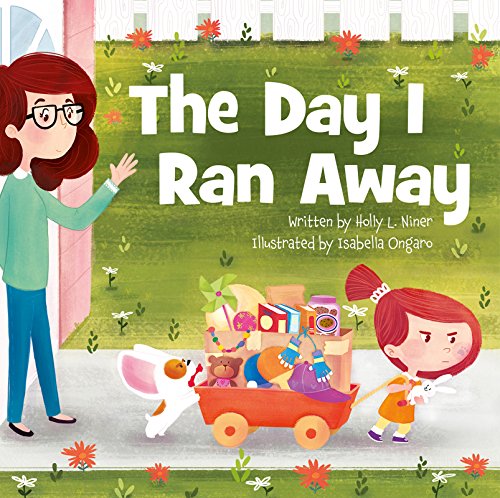
The Day I Ran Away, by Holly L. Niner

“While Dad tucks her in, a little girl named Grace calmly recounts her day—which was anything but calm. She had a tantrum (because of some injustices involving a purple shirt and breakfast cereal) and was banished to her bedroom before deciding to run away. Understanding that kids have ups and downs, Grace’s mom wisely gave her daughter the space and time she needed to reach her own decision to return home—to open arms.

The Day I Ran Away amusingly captures Grace’s mutable moods and childlike logic. Warm, humorous digital paintings offer fun details to keep little listeners busy. Kids can compare the bedtime and daytime scenes and try to figure out how Grace got that purple paw-print on her cheek—and when it got washed away. They can mimic Grace’s facial expressions or copy her poses for some soothing bedtime yoga. And of course, they can create a safe place to run away to when the injustices of Pre-K existence become too much to bear. A pop-up tent in the yard and the haven beneath the dining room table are excellent run-away destinations, as long as you come home for dinner.”

The Day I Ran Away from Flashlight Press is like a well-choreographed dance. Three characters, two voices, three points of view, two timelines, two picture sequences, and a dog spin around each other with no missed beats. The threads fall together easily, and despite action and humor in Isabella Ongaro’s illustrations, the tone of the book is peaceful. The little girl’s growing drowsiness in the bedtime pictures makes sense. She’s been on a big adventure that never took her beyond the reach of love and safety. You’ll want to read The Day I Ran Away over again, even if you aren’t a preschooler, because there’s more to ponder each time you page through the story.

Time

Children at the picture-book stage have a tenuous grasp of time. Their abstract thought wires aren’t fully installed, so they understand time in terms of events. How many times will I go to bed and wake up before that happens? Will it be at breakfast time? Dinner time? Will it take as long as driving to Aunt Sally’s house? 

The Day I Ran Away plays with a preschooler’s time sense by running two chronologies simultaneously. The present bedtime conversation unfolds with words and pictures on the left page of each spread, and the past action from earlier in the day appears in pictures on the right. Without confusion, it puts the reader squarely into a multi-dimensional experience of time. But it’s done so naturally that little ones won’t notice that it’s happening.

Beginning at the End

The trustful connection between the little girl and her father is apparent from the first words of their conversation, but notice the illustration on the title page. It shows the little girl eating dinner with her mother, a meal that must have happened just before bedtime.  The title and cover tell us the little girl ran away, but we begin the story knowing she’s home safe now, and at peace with both parents. Like the cozy bedtime ritual, this early scene-setting creates a safe place from which to reflect on the emotions and reactions that created the chain of events. [As a parent, it’s interesting to see how the father’s calm acceptance of the story includes helping the little girl realize that her mother’s reactions were responses to her daughter’s choices.]

Beginning with the end is also an impressively subtle way of centering a little reader in the action but keeping the parents as the story’s frame. Preschoolers are the center of their own world, but parents are the first orbital ring. The book is structured the way a child’s world is structured – her all-absorbing consciousness of herself is lived inside parental creativity and guidance. This is her adventure, but it won’t have its full meaning for her until she’s told her father all about it before she falls asleep.

The Parents

The parents’ relationship is a strong message in the book, although they don’t appear together in a picture until the last page. Inside the father’s comments and questions to the little girl, you can hear his respect for the mother and his support of how she’s parenting their child. This is at least as powerful as his low-key, almost Socratic method of processing the day with his daughter.

For her part, the mother is letting this bedtime meeting happen without her input. She’s trusting the father and daughter to each other at the end of a long day, but the tone of the book tells you it’s not just because she’s tired. These two are parenting as a team, and their interactions with their daughter are thoughtfully chosen.

The Dog

In addition to his helpful contributions to the bedtime yoga routine, the dog is a wonderful buddy for his little friend. He mirrors or responds to her emotions in every picture. It’s adorable, but it’s also another talking point in the book. The dog’s facial expressions, posture, and actions are clues to the human emotions in each scene, while offering a friendly, four-legged suggestion of how to be there for someone you love, no matter what.

And Finally….

The Day I Ran Away is a proper picture book. It’s well-made, with a hard cover and thick, glossy pages. The colors are bright and attractive, the illustrations are full of life, and there are plenty of interesting details to point out and chat about as you practice paying attention and reading for meaning. The book is standard size, large enough to hold up and read to a circle of children, and just right for reading in the best sofa corner with at least two children on your lap.

The Day I Ran Away is available on Amazon in hardcover and Kindle editions. You can find Activity Guides to use along with the book here.

I received a copy of this book from Flashlight Press in exchange for this review.
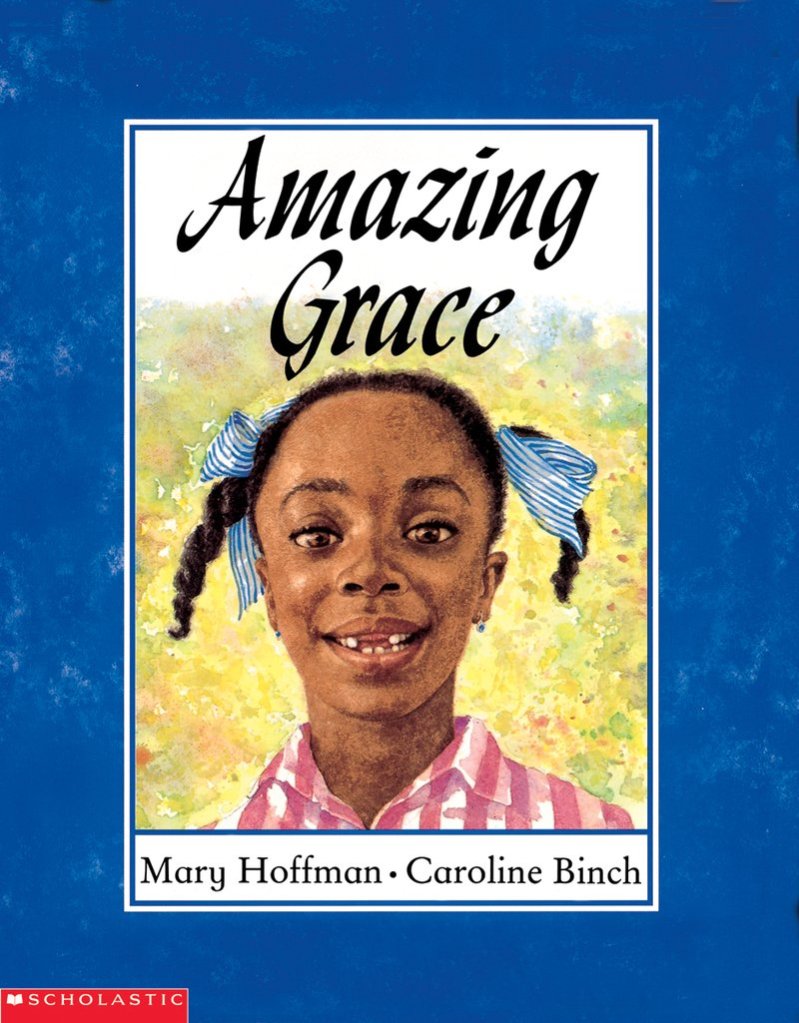
Amazing Grace, by Mary Hoffman

“Grace loves stories, whether they’re from books, movies, or the kind her grandmother tells. So when she gets a chance to play a part in Peter Pan, she knows exactly who she wants to be. Remarkable watercolor illustrations give full expression to Grace’s high-flying imagination.”

Word person that I am, I’m still going to talk about the pictures first for Amazing Grace. Caroline Binch has created an extraordinary work of art here, precisely because the pictures aren’t “extraordinary” in the usual sense. They are life-like. It’s not photo-realism, but it’s clear on every page that she must have taken the people in the book from life – she had models. You look at Grace and Mama and Nana, and you are POSITIVE that they are real people who agreed to pose for the illustrations. And Caroline’s genius is that she achieves this powerful sense without photo-realism. There are soft edges. You know it’s a painting. But the personhood it depicts leaps out of the page at you.

That’s especially important for this story, in which Grace is struggling to overcome the limitations other people want to set for her. Her own peers try to use her gender and her race against her, and just as the illustrations are life-like, the text is life-like too – undramatic, simple, and resoundingly true. Grace’s classmates aren’t deliberately cruel. They’re unconsciously giving voice to the prejudices that are accepted by the world around them. The same children are just as susceptible to Grace’s confidence and talent when she finds the courage to display them.

This is what makes Amazing Grace so powerful – the just-plainness of it, the way you immediately recognize it as truth despite the fact that story is fiction. The best art, in my view, reveals and reflects on truth. Mary Hoffman pulls it off, with both simplicity and depth. Where some stories can be funny for both children and adults, this story can be true and encouraging for readers of all ages.

This book is available on Amazon in hard cover, paperback, ebook, and audiobook editions, and a special 25th anniversary edition.